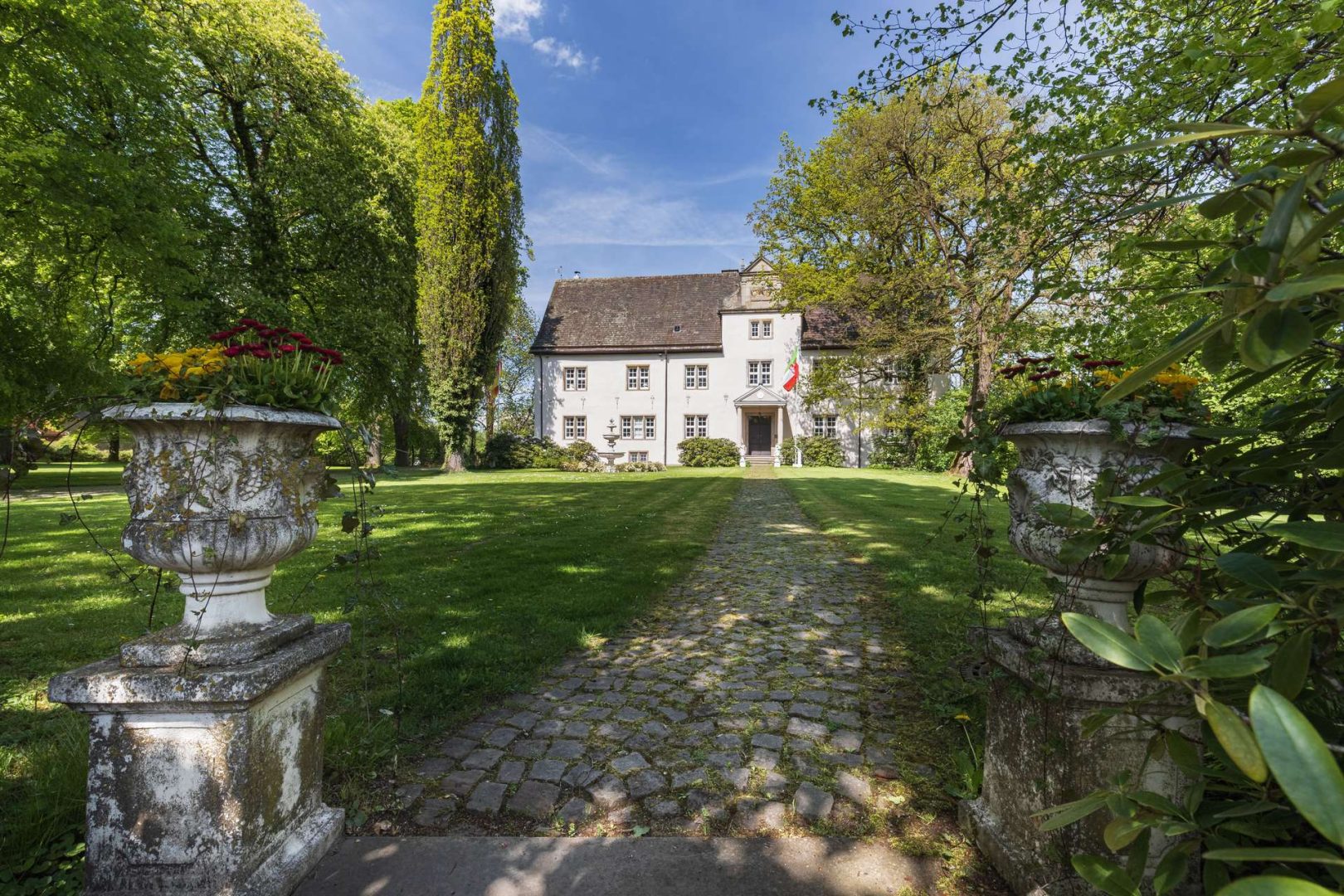
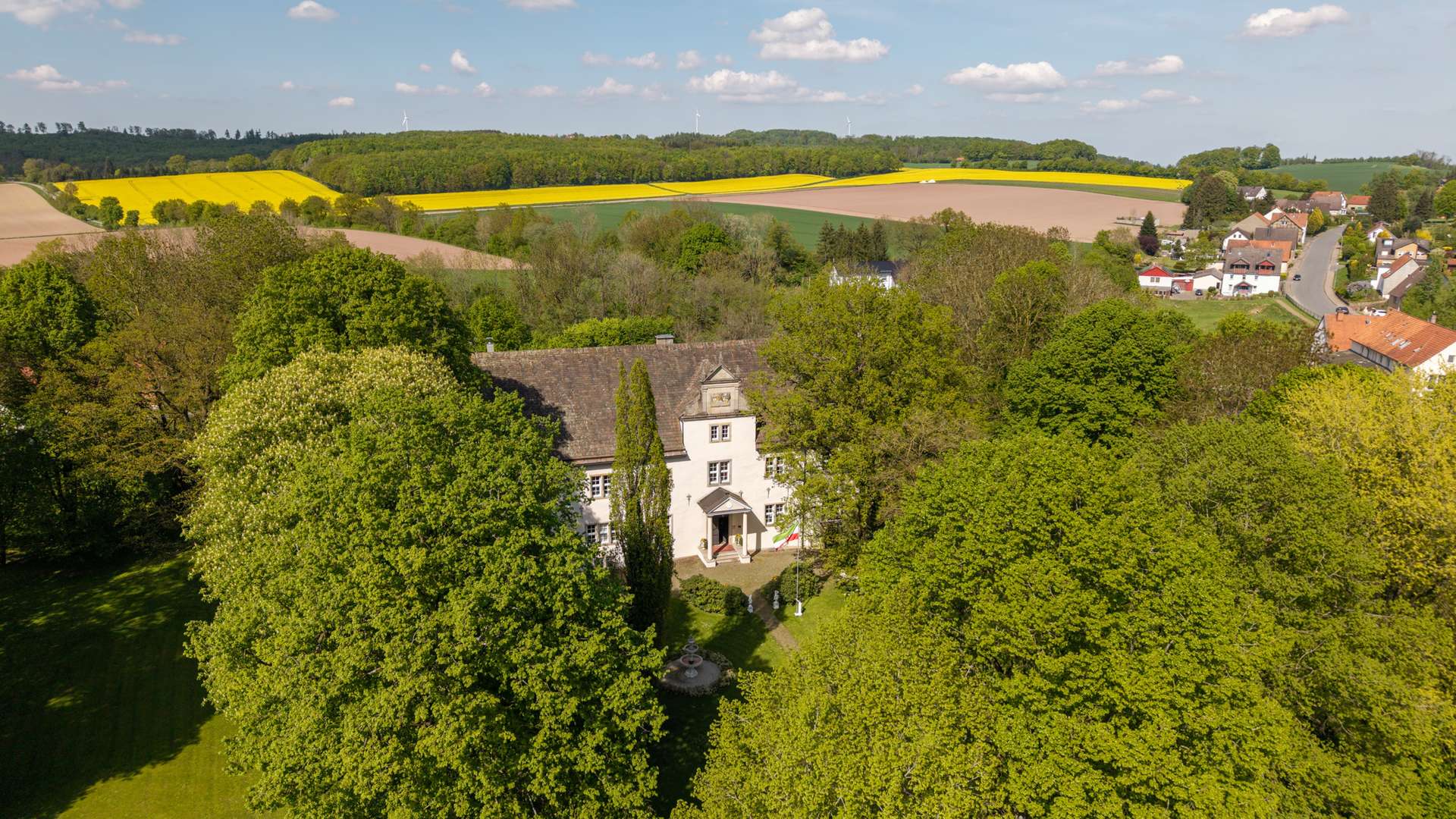
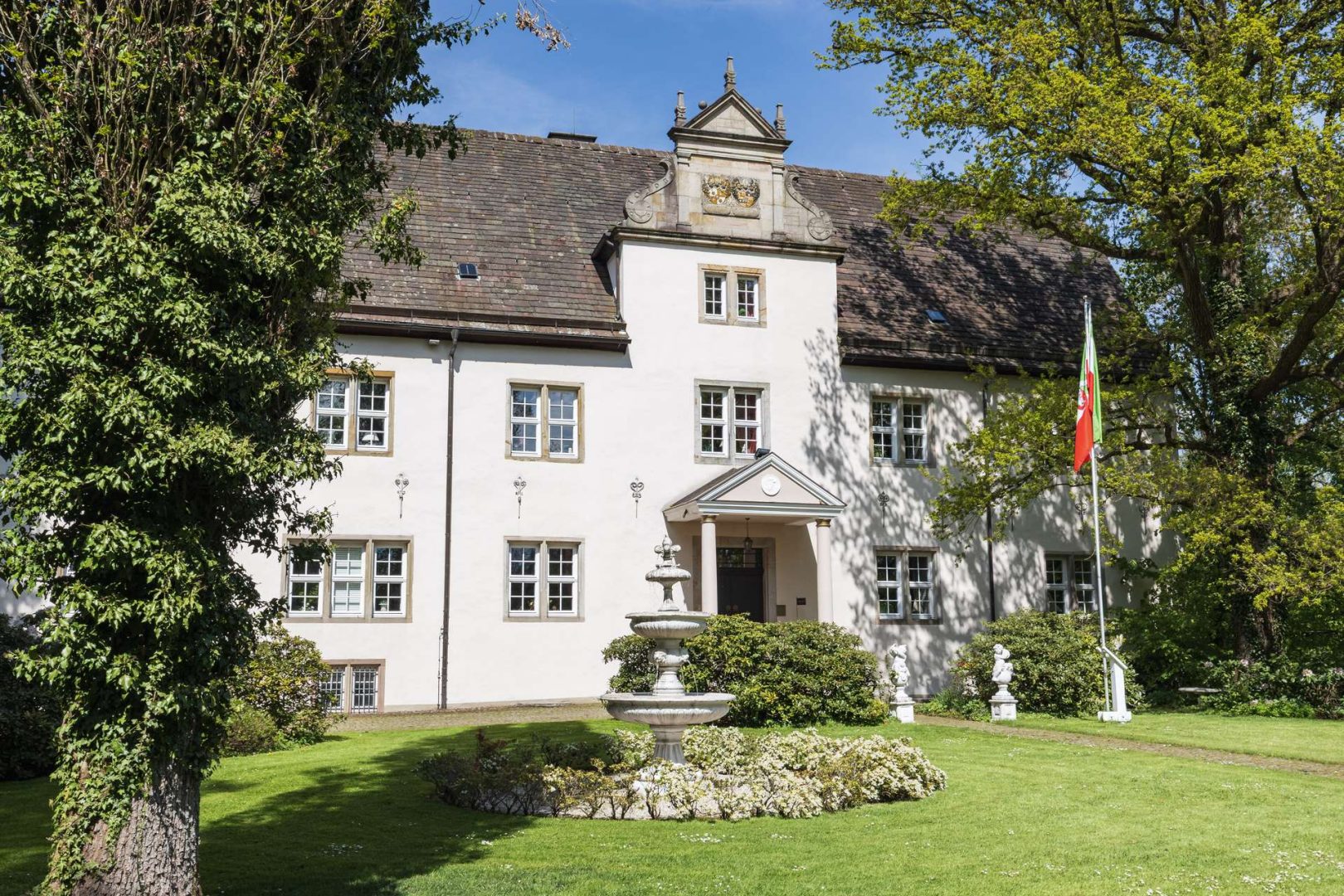
Im lippischen Barntrup, inmitten der reizvollen Kulturlandschaft entlang der Straße der Weserrenaissance, erhebt sich das Schloss Alverdissen – ein beeindruckendes Zeugnis westfälischer Geschichte und Architektur. Errichtet in seiner heutigen Form um 1662 unter Friedrich Christian zu Lippe-Alverdissen auf den erhaltenen Fundamenten und Gewölben einer früheren Burganlage, zählt das dreigeschossige Barockensemble mit Krüppelwalmdach und prägnantem Treppenturm zu den bedeutenden Adelssitzen der Region.
Nach jahrhundertelanger Nutzung als Residenz, Amtssitz, Amtsgericht und zuletzt Staatsarchiv des Landes Nordrhein-Westfalen wurde das unter Denkmalschutz stehende Schloss in den Jahren um 2010 umfassend saniert und in ein vielseitig nutzbares Wohn- und Geschäftshaus überführt. Die durchgeführten Maßnahmen verbanden bauhistorische Substanz mit einem zeitgemäßen Nutzungskonzept – sorgfältig, stilbewusst und mit hohem Anspruch an Substanz und Atmosphäre.
WOHNEN UND ARBEITEN UNTER EINEM DACH – MIT HISTORISCHEM RAHMEN UND FUNKTIONALER FLEXIBILITÄT
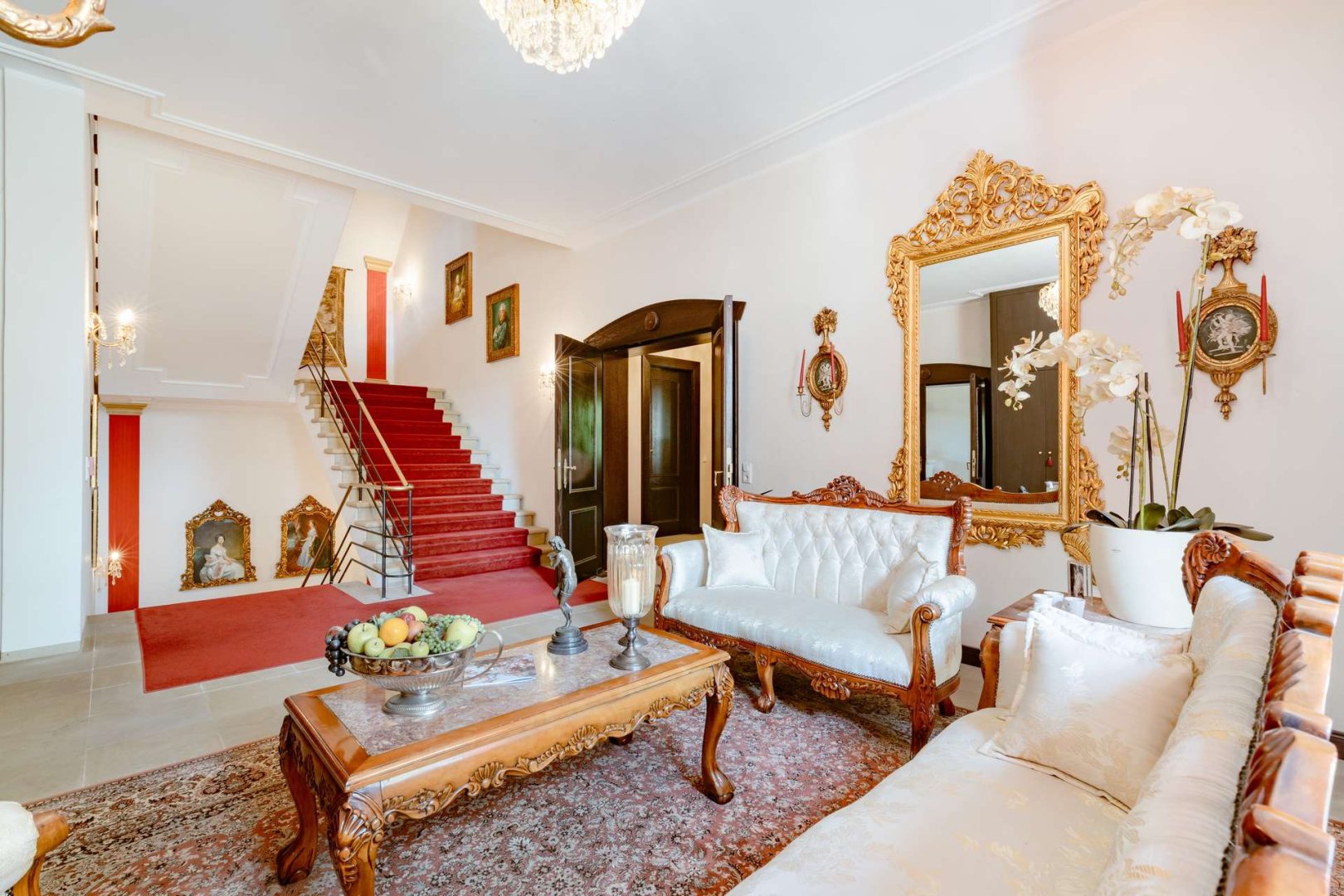
Mit einer Wohnfläche von über 800 m², verteilt auf drei Ebenen, bietet Schloss Alverdissen außergewöhnliche Nutzungsmöglichkeiten für private, repräsentative oder gewerbliche Zwecke. Der ausdrucksstarke Westflügel beherbergt im Erdgeschoss einen großzügigen Barocksaal, der derzeit als Standesamt genutzt wird, sich aber ebenso für Veranstaltungen, Ausstellungen oder Büronutzung eignet. Direkt vorgelagert ist ein einladender Empfangsbereich, der als Vorraum oder Wartezone dient, ergänzt durch eine großzügig ausgestattete Küche, die sich hervorragend für gastronomische oder eventbezogene Nutzungen anbietet.
Der Ostflügel verfügt auf gleicher Ebene über separate Büroräume mit eigenem Zugang – ideal für eine unabhängige gewerbliche Nutzung, Praxisräume oder ein kreatives Atelier. Die klare funktionale Gliederung beider Flügel schafft optimale Voraussetzungen für das Zusammenspiel von Wohnen, Arbeiten und Repräsentieren in einem historischen Rahmen mit zeitgemäßem Komfort.
Das erste Obergeschoss bildet den zentralen Wohnbereich. Der östliche Schlaftrakt mit zwei Zimmern und angrenzendem Bad bietet Privatsphäre und Ruhe, während sich im Westflügel der über 100 m² große Wohnraum mit Kamin, eine großzügige Küche mit angrenzendem Essbereich befindet – ein eindrucksvolles Ensemble für großzügiges, stilvolles Wohnen mit Blick in den Park.
Im Dachgeschoss setzen sich die großzügigen Dimensionen fort: Zwei separate Schlaftrakte mit jeweils eigenem Badezimmer bieten ideale Voraussetzungen für Gäste oder zusätzliche Familienmitglieder. Alle Ebenen sind durch eine zentrale, restaurierte Sandsteintreppe sowie einen eingebauten Personenaufzug komfortabel erschlossen.
STIL, SUBSTANZ UND BAULICHE PERSPEKTIVEN
Der Gewölbekeller unter dem Schloss steht als Nutzfläche zur Verfügung und bietet Potenzial für Lagerung, Vinothek oder weitere Ausbaumöglichkeiten. Naturstein- und Sandsteinböden, restaurierte Holz- und Massivholztüren, klassische Fensterformen sowie die massive Bauweise mit bis zu einem Meter dicken Außenwänden sorgen für angenehmes Raumklima zu jeder Jahreszeit – auch ohne moderne Klimatechnik.
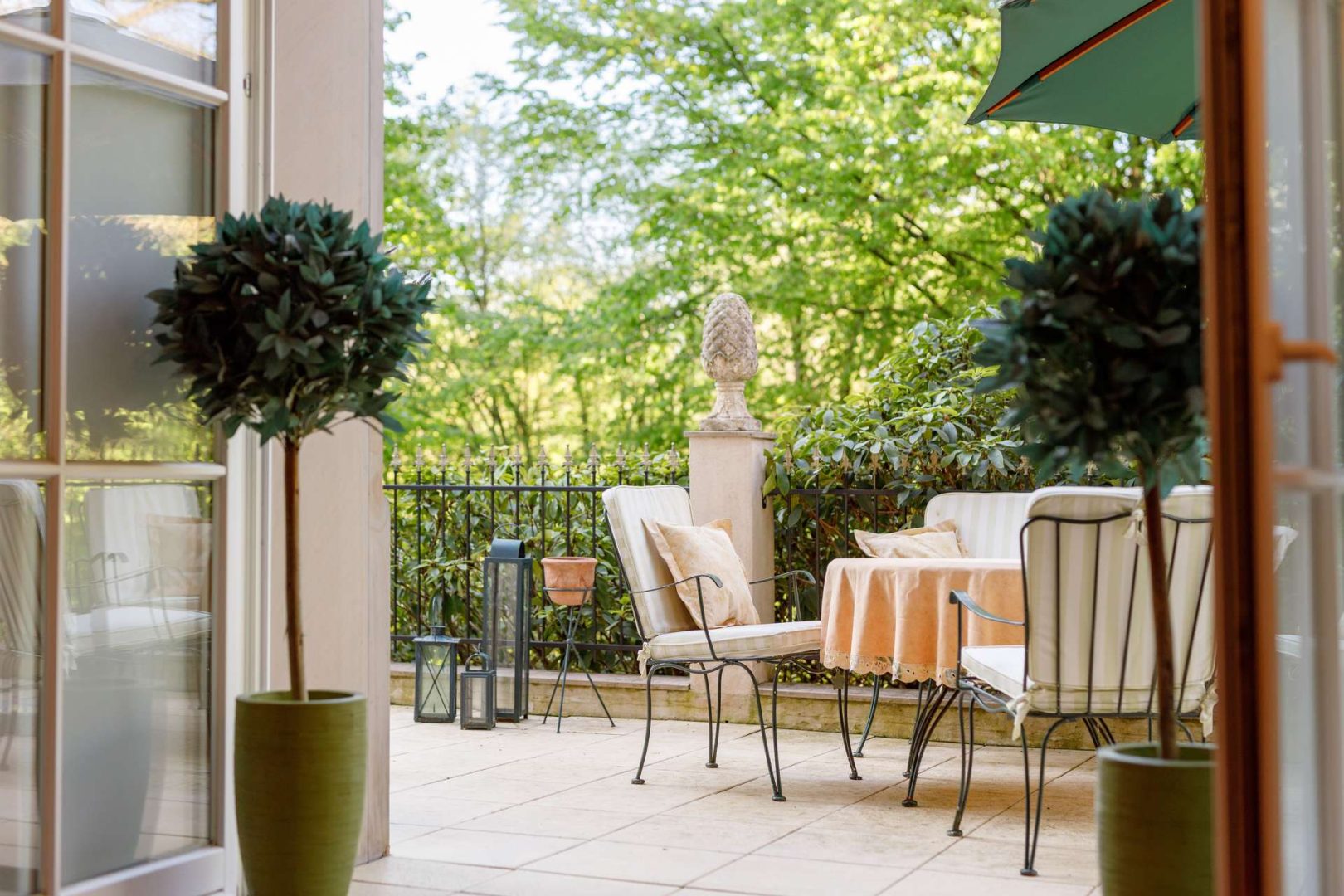
Die Außenanlagen überzeugen mit einer nicht einsehbaren Terrasse, gepflegtem Park, Außenbeleuchtung, Kameraüberwachung und einer steuerbaren Alarmanlage. Eine Erweiterung der baulichen Anlagen (z. B. Gästehaus, Schwimmbad oder zusätzliche Garagen) ist gemäß genehmigter Planung möglich und kann aktiviert werden.
EIN HISTORISCHER ORT MIT BEWEGTER VERGANGENHEIT
Die Geschichte von Schloss Alverdissen reicht bis ins Jahr 1396 zurück, als erstmals eine Burg der Grafen von Sternberg urkundlich als Herrensitz der Grafschaft erwähnt wurde. Nach der Zerstörung des ursprünglichen Baus wurde das heutige Schloss um 1662 durch Graf Philipp zur Lippe – später Graf zu Schaumburg-Lippe – auf den erhaltenen Kellergewölben und Grundmauern einer früheren Burganlage errichtet. Sein Sohn Friedrich Christian legte 1662 – noch im Kindesalter – den Grundstein für das heutige Schlossgebäude. Der Barockbau mit seinem markanten Treppenturm bildete fortan einen bedeutenden Herrensitz der Region. Mit Philipp Ernst I. etablierte sich in Alverdissen eine Nebenlinie des Hauses Lippe, die dort bis ins 18. Jahrhundert residierte.
Im Jahr 1812 wurde das Schloss von Fürstin Pauline zu Lippe erworben, die es als Verwaltungssitz für das Amt Sternberg bestimmte. Von 1879 bis 1969 beherbergte das Schloss das Amtsgericht. In den Jahren 1977 bis 1979 erfolgte eine grundlegende Modernisierung, wonach das Schloss über viele Jahre hinweg als Nebenstelle des Staatsarchivs Detmold genutzt wurde.
Erst 2009 – nach umfangreichen Sanierungsmaßnahmen – ging das Schloss in Privatbesitz über und wurde seitdem als Wohn- und Geschäftshaus genutzt. Die besondere Baugeschichte, die durchgängig öffentliche Relevanz hatte, verleiht dem Objekt eine kulturelle Bedeutung weit über die Region hinaus.
<<>>
In Barntrup in Lippe, in the middle of the charming cultural landscape along the Weser Renaissance Road, rises the Alverdissen Castle - an impressive testimony to Westphalian history and architecture. Built in its present form around 1662 under Friedrich Christian zu Lippe-Alverdissen on the preserved foundations and vaults of an earlier castle complex, the three-storey baroque ensemble with its crippled hipped roof and striking stair tower is one of the most important aristocratic residences in the region.
After centuries of use as a residence, official residence, local court and, most recently, state archive of the county of North Rhine-Westphalia, the listed castle was extensively renovated in 2010 and converted into a versatile residential and commercial building. The measures carried out combined the historical substance of the building with a contemporary usage concept - carefully, stylishly and with a high standard of substance and atmosphere.
LIVING AND WORKING UNDER ONE ROOF - WITH A HISTORIC SETTING AND FUNCTIONAL FLEXIBILITY
With over 800 m² of living space spread over three floors, the Alverdissen Castle offers exceptional usage options for private, representative or commercial purposes. The expressive west wing features a spacious baroque hall on the first floor, which is currently used as a registry office, but is also suitable for events, exhibitions or office use. Directly in front of it is an inviting reception area, which serves as an anteroom or waiting area, complemented by a generously equipped kitchen, which is ideal for catering or event-related uses.
The east wing has separate offices on the same level with their own access - ideal for independent commercial use, practice rooms or a creative studio. The clear functional structure of both wings creates optimal conditions for the interplay of living, working and representation in a historical setting with contemporary comfort.
The second floor is the main living area. The eastern bedroom section with two bedrooms and adjoining bathroom offers privacy and tranquillity, while the west wing features a living room with more than 100 m², a fireplace and a spacious kitchen with adjoining dining area - an impressive ensemble for spacious, stylish living with a view of the park.
The generous dimensions continue on the top floor: two separate bedroom wings, each with its own bathroom, offer ideal conditions for guests or additional family members. All levels are easily accessible via a central, restored sandstone staircase and a built-in passenger elevator.
STYLE, SUBSTANCE AND STRUCTURAL PERSPECTIVES
The vaulted cellar under the castle is available as usable space and offers potential for storage, a wine cellar or further expansion options. Natural stone and sandstone floors, restored wooden and solid wood doors, classic window shapes and the solid construction with exterior walls up to one meter thick ensure a pleasant indoor climate all year round - even without modern air conditioning technology.
The outdoor facilities convince with a hidden terrace, well-kept park, outdoor lighting, camera surveillance and a controllable alarm system. An extension of the structural facilities (e.g. guest house, swimming pool or additional garages) is possible in accordance with the approved planning and can be activated.
A HISTORIC PLACE WITH AN INTERESTING PAST
The history of the Alverdissen Castle dates back to 1396, when a castle belonging to the Counts of Sternberg was first mentioned in a document as the county seat. After the destruction of the original building, the present castle was built around 1662 by Count Philipp zur Lippe - later Count of Schaumburg-Lippe - on the preserved cellar vaults and foundation walls of an earlier castle complex. His son Friedrich Christian laid the foundation stone for today's castle building in 1662 while he was still a child. From then on, the baroque building with its striking stair tower became an important manor house in the region. With Philipp Ernst I, a collateral line of the House of Lippe established itself in Alverdissen and resided there until the 18th century.
In 1812, the castle was acquired by Princess Pauline zu Lippe, who designated it as the administrative seat for the Sternberg district. From 1879 to 1969, the castle housed the district court. Between 1977 and 1979, the castle underwent a thorough modernization, after which it was used for many years as a branch of the Detmold State Archives.
It was not until 2009 - after extensive renovation work - that the castle passed into private ownership and has since been used as a residential and commercial building. The special building history, which has always been of public relevance, gives the property a cultural significance far beyond the region.